
 Some believe that to succeed, one must work tirelessly to carve a new, original path, better than any before. But what if true success comes from using wisdom built by decades of learned experience? From continuing the paths already paved by the work of those who came before us?

When I started my internship, I carried the quiet belief that I had to prove myself by doing everything independently. Before I even had the chance to learn how, I felt I needed to prove myself to be an asset. I thought competence meant having the answers before asking questions. I wanted every project to be perfect before anyone else saw it, convinced I needed to prove I was “ready” by working alone.
This isolating mindset, however, was quickly challenged by the Arras Foundation. Working in a collaborative culture eliminates the pretense of perfection, and there’s a clear understanding that no one is meant to be all-knowing. In fact, curiosity is encouraged: ask questions, seek guidance, and lean on one another’s wisdom. And this concept is not limited to us as individuals; it’s applied on a large scale– seen in the ways large projects are managed.
One meeting in particular changed the way I view the work we do. We discussed the idea that it could take forty years for a large-scale project to be fully complete. At first, that sounded demotivating: the thought that our current members’ endless efforts would go to credit a stranger who happens to be in leadership at the time of its success. But the more I thought about it, the more it made sense. Meaningful work rarely belongs to one person or one season. Instead, it’s passed from one set of hands to another, refined over decades by people who each contribute a piece of something larger than themselves.
That conversation led me to speak with Savannah Crosby, whose perspective inspired me to think even deeper about legacy. We are rarely creating from scratch. Usually, we are inheriting ideas, missions, and systems that others have invested years, even decades, into building. Our responsibility isn’t to erase what came before us in pursuit of credit for originality, but to honor that work by carrying it forward.
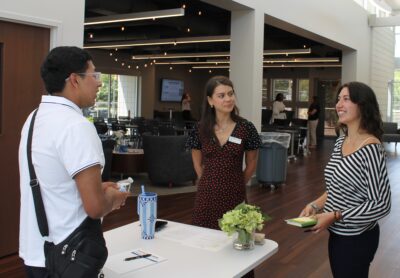
Because Arras’s end goal is connection, competition for individual credit loses meaning when the potential of large-scale success is truly only possible through collective action. Through collaboration.
Whether it’s completing a project or learning under the mentorship of another, we are not the first to trek these tracks. And this is a good thing, because I don’t want to imagine a world in which we only rely on the limited knowledge we have independently.
Nothing would ever get done.